Kama (鎌)
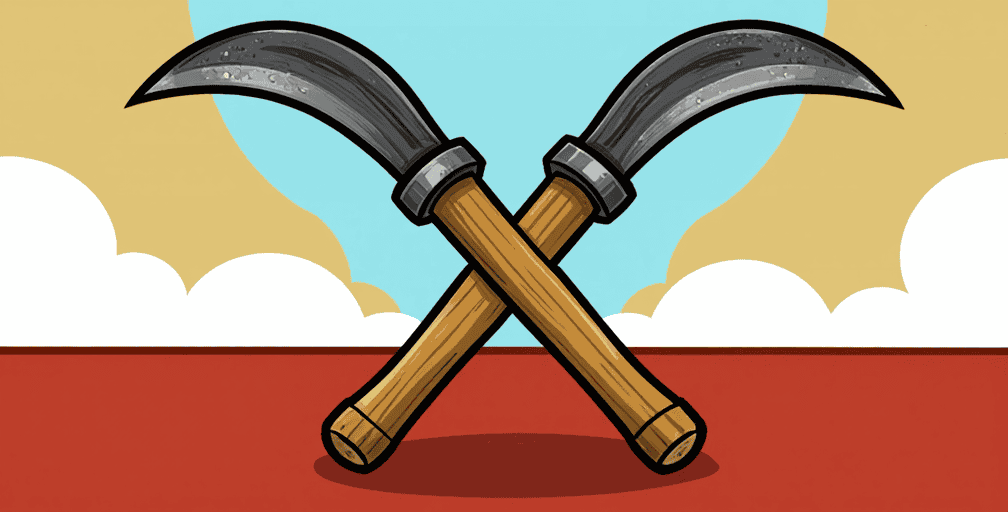
Kama (鎌) on sirppi, työkalu, jossa on lyhyt puinen tai metallinentyökalu, jonka päässä on oikean kulman kaarevalla terällä. Harjoitettuna pareissa, se on yksi yleisimmistä maataloutta-aseen muunnelmaksi okinawalaisen perinteen kanssa.
Fyysiset Ominaisuudet
| Ominaisuus | Yksityiskohta |
|---|---|
| Kahvan pituus | noin 30-35 cm |
| Terän pituus | noin 20-25 cm, kaarevana sisään |
| Materiaali | Metalli terälle, kovapuu kahvalle |
| Käyttö | Pareissa hallinnassa |
Tekniikka
Kaman ensisijaiset toiminnot ovat:
- Vaakasuorat leikkaukset alhaalla tai keski-tasolla
- Koukutus: sisäkäyrän terää käytettävissä vastustajan raajojen tai aseen ansaan
- Työntö terän kärjellä
- Esto kahvalla, ohjaten uudelleen terällä
Kaman parittaminen tarkoittaa, että harjoittelija voi samanaikaisesti hyökkää ja puolustaa: yksi kama estää kun taas toinen leikkaa, tai molemmat toimivat täydentävinä kaarissa.
Historialliset Alkuperät
揆奮館:n osiossa 鎌術(鎌之手) ajoitetaan sen ilmaantuminen noin 700 vuotta sitten, kuningas Eison aikakaudella, kuvaten kamaa kehityskaari maataloutta kuwa (kuokka) maanviljelijän varastosta ja myöhemmin jalostettu kiinalaisten martiaali-taiteen yhteyden kautta.
Artikkeli huomautuksena, että Ryukyu-kaman harjoittelu sisältää:
- Kaksois-kama (yksi joka kädessä)
- Köyteen kiinnitetty kama (鎌に紐を付ける)
- Pitkän kahvan kama asennettu viiden-shaku-sauvalle laajennetulla ulottuvuudella
Ryukyu Kobudo lähteiden mukaan kama on maatalon sirppi käytetty suoraan asekeiksi ilman muutoksia. Koska ne ovat terävät aseet, ne ovat käytännöllisiä mutta vaarallisia käytännössä, ja korkean tason harjoittelijat tyypillisesti opettavat niitä. Kanegawa no Nichō-gama kata on edustava kaksois-kama muoto siirretty erityisiin linjoihin.
Katat Taira-opetussuunnitelmassa
- Kanegawa no Nicho-gama (兼川の二丁長): Ensimmäinen kama-kata, käyttäen pari-sirppiä. Painottaa matalia vaakasuoria leikkauksia ja koukutustekniikoita sisäterän kaarella vastustajan aseen ansaamiseksi.
- Tozan no Nicho-gama (唐山の二丁長): Toinen kama-kata. Sisältää aggressiivisempia työntöjä terän kärjellä ja samanaikaisia hyökkäys-puolustus-kaavoja käyttäen molempia käsiä riippumattomasti.
Merkintä "nicho-gama" (二丁 = kaksi kappaletta, 長 = välineitä) määrittelee pari-harjoittelumuodon.
Muunnelmat
Joissakin organisaatioissa harjoitellaan ketju-sirppimuunnelmaa (kusarigama, 鎖鎌), jossa terä on kiinnitetty painotettuun ketjuun, laajentaen kaman kantaman joustavan aseen tasolle. Tämä muunnelma on yleisempi Japanin mantereella; Ryukyu kobudo käyttää yleensä vakio-pari-kamaa.
Lähteet
- Kama (työkalu) — Wikipedia: Alkuperä (riisinhahmotyökalu tuotu Kaakkois-Aasiasta Okinawalle), tekniikka (leikkaus, koukutus liitoskohdassa, esto kahvalla), pari-sirppiharjoittelu mainittu
- Okinawan kobudō — Wikipedia: Vahvistaa kaksi kama-kataa Taira-opetussuunnitelmassa
- Matayoshi Kobudo — Wikipedia: Matayoshin kama-kata (Kama Nu Ti)
- 琉球古武道武器術 — 揆奮館流武術: Kuningas Eison aikakauden alkuperä (~700 vuotta sitten), kehitys kuwasta (kuokka), kiinalaiset kamppailutaideyhteydet, harjoittelumuunnelmat (kaksois-, köyteen kiinnitetty, pitkäkahvainen)
- Ryukyu Kobudo Weapons: Maatalouden sirpit aseina ilman muutoksia, terävän aseen vaarat, korkean tason harjoittelijaopetus, Kanegawa no Nichō-gama -kata
- JRKF — Mitä on Ryukyu Kobudo: Kanegawa no Nichō-gama edustuksellisena kaksois-kama-katana