Tonfa (トンファー)
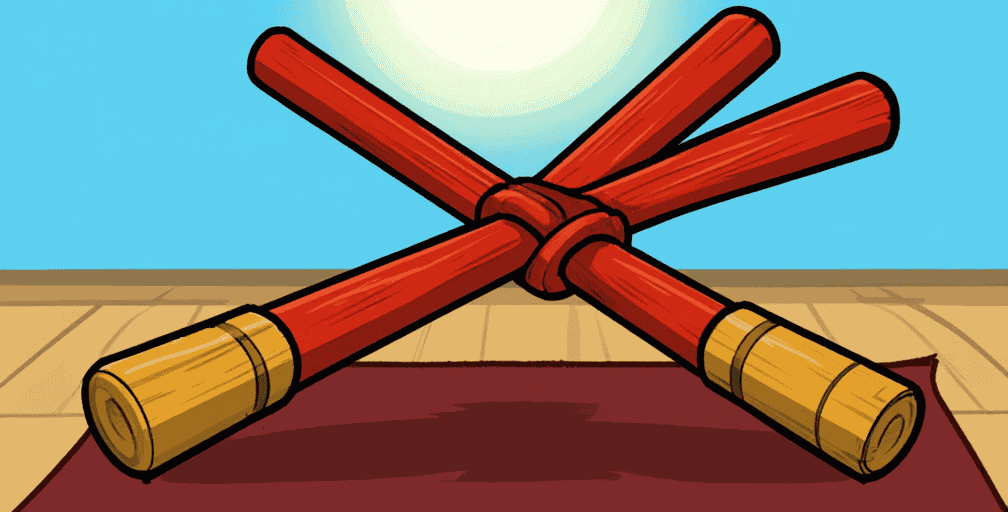
Tonfa (トンファー, myös kirjoitettu 答禍 tai 当破) on kovapuuase, jossa on kohtisuora kahva asetettu noin kolmasosassa puisen tangon pituutta. Harjoitettuna pareissa, se on ensisijaisesti lähietäisyyksien iskuasse, jolla on erottuva pyörivä liike.
Fyysiset Ominaisuudet
| Ominaisuus | Yksityiskohta |
|---|---|
| Pituus | noin 45-50 cm (hieman pidempi kuin käyttäjän ennakko) |
| Kahvan asema | Noin 15 cm päästä päähän |
| Materiaali | Kovapuu (punainen tai valkoinen tammi) |
| Käyttö | Hallinnassa pareissa |
Alkuperäteoria
Yleisimmin lainattu alkuperäteoria on, että tonfa johtuu perinteisen kivivalimon kahvasta (tobira tai tofa). Tämä oli raskas puinen tappi, joka oli asetettu kiveen; kun poistettiin, se voitiin käyttää luonnolliseksi käsiaseeksi. Onko tämä historiallisesti tarkka vai sodan jälkeinen kansan etimologia on keskusteltu.
Artikkelin 揆奮館流武術 mukaan 柱拐 (tunkuwa / tonfa) on ase, joka perustuu Fuzhou, Kiinasta, jossa ase ja sen tekniikat olivat tunnetut ja termi tonkua käytetään paikallisissa murteissa. Artikkeli selittää, että tonfa kehittyi mortin kahvasta (臼の柄ヘラ) ja oli ensisijaisesti puolustusase: hallinnassa molemmilla käsillä vastaanottaa hyökkäyksiä miekoista, keihäistä tai bō:sta, riittävän iskuvoimalla että vastustajan ase voitaisiin lyödä kädestä.
Vaihtoehto alkuperäteoriat sisältävät kivivalimon kahvan (石臼の挽き棒) ja maatalon maataloutta (ヘラ). Ryukyu Kobudo -aseiden sivu kuvaa nykyaikaista tonfia "T-muotoiseksi lyhyeksi kepillä sivukahva", painottaen sen monipuolisuutta iskuun, estoihin ja koukutukseen.
Tekniikka
Tonfan keskeinen tekniikka on pyöräytys-ja-isku: ase kääntyy eteen kahvakahvasta lyödäkseen kyynärvarren pituisen iskun, sitten vetäytyy takaisin. Varren takaosa suojaa kyynärvartta torjuttaessa. Lähietäisyydellä otteen voi vaihtaa käyttämään kahvaa lyhyenä työntökeihäänä.
Moderni poliisi-PR-24-pamppu on suoraan johdettu tonfa-muotoilusta, mikä selittää osittain aseen laajempaa nykypäivän tunnettuutta.
Kata Tairan opetussuunnitelmassa
Tairan linja säilyttää kaksi tonfa-kataa:
- Yaraguwa no Tonfa (屋良小のトンファー): Ensimmäinen muoto. Käyttää kaikkia kolmea otetta: honte-mochi (luonnollinen), gyakute-mochi (käänteinen) ja tokushu-mochi (erityinen). Tokushu-mochi-ote, jossa tarrataan varteen kahvan sijaan, on erityisen tyypillinen Yaraguwa-katalle.
- Hamahiga no Tonfa (浜比尌のトンファー): Toinen muoto, liittyy Hamahiga-saaren sukulinjaan, joka esiintyy myös sai-kata-kokoelmassa.
Lähteet
- Tonfa — Wikipedia: Fyysiset mitat (~38–51 cm, hieman kyynärpään ohi), kolme otetyyppiä (honte-mochi, gyakute-mochi, tokushu-mochi), alkuperäkeskustelu (Kiina, Kaakkois-Aasia, Okinawa), huomauttaa tokushu-mochin käytöstä Yaraguwa-katassa
- Okinawan kobudō — Wikipedia: Vahvistaa kaksi tonfa-kataa Tairan opetussuunnitelmassa
- Matayoshi Kobudo — Wikipedia: Matayoshin tonfa-kata (Matayoshi no Tunkuwa Dai Ichi/Ni)
- 琉球古武道武器術 — 揆奮館流武術: Fuzhoun Kiina -alkuperä, laastikappaleen johdannainen (臼の柄ヘラ), puolustuksellinen asekäyttö
- Ryukyu Kobudo Weapons: T-muotoinen lyhyt keppi -kuvaus, poliisikäyttöönotto maailmanlaajuisesti, vaihtoehtoiset alkuperäteoriat (kivimylly, maataloustyökalut), tekniikan muunnelmat
- 琉球古武術 — Japanese Wikipedia: Maataloustyökalujen alkuperät, harjoitteluvaatimukset