Kata Name Lineage: The Complete Story
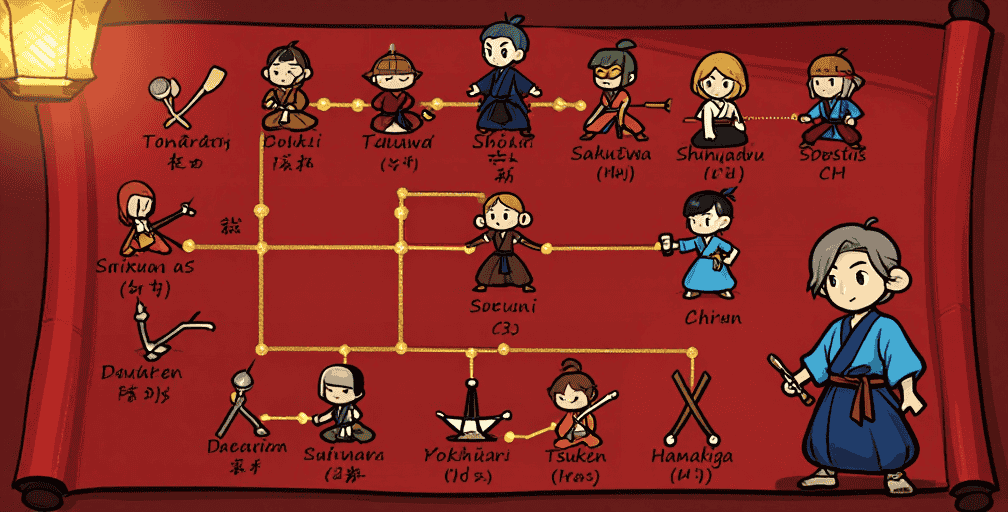
Below is a comprehensive analysis of major Ryukyu kobudo kata families, each linking kata to weapon, main styles that use it, and the most credible origin/creator attribution. This reveals the complex network of historical relationships between different lineages and how kata evolved across multiple traditions.
Shūshi / Shushi / Shuji no Kon (周氏の棍)
Weapon: Rokushaku bō (staff).
Main styles:
- Yamane/Yamanni‑ryū (Chinen line: Masami Chinen → Kishaba Chōgi → Oshiro Toshihiro / RBKD). thekaratepage
- Taira line Ryūkyū Kobudō / Ryūkyū Kobujutsu Hozon Shinkōkai (Shushi no Kon Sho & Dai). ja.wikipedia
- Matayoshi kobudō and many karate kobudō programs (Shōrin‑ryū, Shotokan, Shitō‑ryū etc.). reddit
Origin / creator (competing theories):
- Chinen Sanda (Yamani‑no‑Chinen) – Patrick McCarthy attributes Shūji no Kun to Chinen Sanda, as part of the Yamane‑ryū corpus. koryu-uchinadi
- Soeishi Pechin – Nakamoto Masahiro notes similarities to Soeishi no Kon and suggests Soeishi might have created Shushi no Kon; Bugei Ryūha Daijiten states that Shushi no Kon was made by Soeishi. kodokanboston
- Chinese master Shū (Zhou) – Hokama Tetsuhiro and the Zen Okinawa Kobudo Renmei's Okinawa Kobudo Kyohon say that around 1831 a bōjutsu master named Shu (Zhou) from Shanghai taught in Naha Asato near Sōgenji; his bōjutsu became known as Shūshi no Kon. thekaratepage
Linkages: The kata is a node where the Chinen/Yamane family, Soeishi family, and a Chinese Shu/Zhou narrative converge. Taira's Shushi no Kon Sho/Dai likely combine an earlier Yamane version with sequences from Choun no Kon and Soeishi‑line material. koburyu
Sakugawa no Kon (佐久川の棍)
Weapon: Bō.
Main styles:
- Yamane/Yamanni‑ryū (Chinen family classical set). en.wikipedia
- Taira line (Sakugawa no Kon Sho/Chu/Dai). ja.wikipedia
- Matayoshi kobudō; many karate kobudō syllabi (Shōrin‑ryū, Isshin‑ryū, etc.). vernonmasonkarate
Origin / creator:
- Widely credited to Sakugawa Kanga (Tōde Sakugawa). Multiple histories say he "developed a bō kata, Sakugawa no Kon," in addition to passing down Kusanku. authenticancientarts
Linkages: This is the canonical Shuri‑bō kata; it appears in nearly every major kobudō line, often as a core or intermediate form, making Sakugawa a central ancestor for both Yamane and later Taira/Matayoshi branches. karatekobudo
Chōun / Choun no Kon (朝雲の棍 / 趙雲の棍)
Weapon: Bō.
Main styles:
- Taira line (Choun no Kon in Ryūkyū kobudō lists). ja.wikipedia
- Yamane‑related and Matayoshi‑related curricula (Choun no Kun in many RBKD and competition lists). rbkd-germany
Origin / creator:
- Kata dictionary (based on Japanese sources) lists creator as Soeishi Yoshiyuki, and notes Chōun/Choun is the Okinawan reading of the Chinese name Zhao Yun (Three Kingdoms general famous for spear skill). alangodshaw
Linkages: Often seen as part of the same Soeishi family of bō kata as Shushi no Kon and Soeishi no Kon, with some evidence that modern Shushi Sho/Dai were expanded using phrases from Choun no Kon. kodokanboston
Soeishi / Shiishi no Kon (添石の棍)
Weapon: Bō.
Main styles:
- Taira line (Soeishi no Kon Sho & Dai). ja.wikipedia
- Matayoshi; some Yamane‑derived lines. reddit
Origin / creator:
- Strong consensus (Nakamoto, Inoue, kata‑dictionary sources) that it is by Soeishi Pechin / Soeishi line, with Soeishi being a Shuri noble and master of bō. alangodshaw
Linkages: Soeishi is portrayed as a prolific bōjutsu creator; some sources attribute Shushi, Choun, and Soeishi no Kon all to Soeishi, while Yamane‑side accounts link Shushi more closely to Chinen. koryu-uchinadi
Shirotaru / Shirataru no Kon (白樽の棍)
Weapon: Bō.
Main styles:
- Yamane‑ryū classical set. mineralogicalrecord
- Taira line (Shirataru no Kon Sho & Dai). ja.wikipedia
- Some Shōrin‑ryū kobudō and Ryukyu kobudō groups.
Origin / creator:
- Attributed in Yamane‑ryū sources to Chinen Sanda or his immediate successors, as part of the Yamani Sanda–Masami Chinen corpus. karatekobudo
Linkages: Exemplifies Yamane's influence on Taira: Taira systematized a Yamane kata into his Ryukyu kobudō syllabus and later variations appear in Isshin‑ryū and other karate kobudō programs. thekaratepage
Yonekawa / Yunigawa no Kon (与根川の棍)
Weapon: Bō (often "left‑handed" or Hidari Bō in Yamane usage).
Main styles:
- Yamane‑ryū (classical five). mineralogicalrecord
- Matayoshi kobudō (Yonegawa no Kun as advanced kata). isshin-concentration.blogspot
- Influences in Tokumine no Kon variants.
Origin / creator:
- Considered a Yamane‑ryū kata, associated with Chinen Masami's curriculum. koryu-uchinadi
Linkages: Some researchers argue that Tokumine no Kon in Isshin‑ryū is a simplified and renamed Yonegawa no Kon (Shimabuku reworked and renamed it), showing how a Yamane kata flowed into karate kobudō under a new label. ryukyu-bugei
Tokumine no Kon (徳嶺の棍)
Weapon: Bō.
Main styles:
- Matayoshi kobudō. youtube
- Isshin‑ryū karate kobudō (famous as Tokumine no Kun). isshin-concentration.blogspot
- Federation and open‑style kobudō lists.
Origin / creator:
- Generally attributed to Tokumine Pechin, a 19th‑century Okinawan swordsman/karateka exiled to Yaeyama; kata dictionary notes "Tokumine Pechin's staff" and treats Tokumine as a historical creator. ryukyu-bugei
- As above, some argue that the Isshin‑ryū Tokumine is in fact a simplified Yonegawa no Kon renamed in Shimabuku Tatsuo's curriculum. isshin-concentration.blogspot
Linkages: Sits at a junction between Yaeyama‑derived bōjutsu, Yamane‑style forms, and later karate kobudō adaptations.
Tsuken / Chikin Bō & Tsuken Sunakake no Kon (津堅棒・津堅砂掛けの棍)
Weapon: Bō and eku (oar).
Main styles:
- Taira line (Tsuken Bō; Tsuken Sunakake no Kon as an eku kata). ryukyukobudoshinkokai.wordpress
- Matayoshi kobudō (Tsuken no Kun; Chikin Aka Chu no Eku Di, etc.). reddit
- RBKD and Yamane‑influenced groups list Chikin Bō/Tsuken Bō and Shinakachi/Sunakake no Kun. en.wikipedia
Origin / creator:
- Place‑name origin: Tsuken Island southeast of Okinawa. Etymology of Sunakake: suna (sand) + kake (to throw) – fishermen flick sand into attackers' eyes. youtube
- Ryukyu Kobudo Shinkokai notes Tsuken Sunakake no Kon as a kata developed by fishermen, using an oar as weapon. ryukyukobudoshinkokai.wordpress
Linkages: Demonstrates how local island tactics (oar + sand) became formal kata; both Taira and Matayoshi formalized Tsuken material into their systems, and RBKD retains variants in its Yamanni list.
Chatan Yara no Kon / Chatan Yara no Sai (北谷屋良の棍・釵)
Weapon: Bō and sai.
Main styles:
- Taira line Ryūkyū kobudō. ja.wikipedia
- Isshin‑ryū (Chatan Yara no Sai as a core sai kata). aokkclub
- Shōrin‑ryū and other karate kobudō syllabi.
Origin / creator:
- Named after Chatan Yara, an 18th‑century martial artist from Chatan village; John Sells and other researchers treat the forms as originating from Yara's weapons methods. aokkclub
Linkages: A classic example of person‑name kata; Taira's versions influenced Shimabuku Tatsuo, who learned Chatan Yara no Sai from Taira and integrated it into Isshin‑ryū with his own body mechanics. aokkclub
Hamahiga no Sai (浜比嘉の釵)
Weapon: Sai.
Main styles:
- Taira line (one of the core sai kata). ryukyukobudoshinkokai.wordpress
- Some multi‑lineage kobudō organizations.
Origin / creator:
- Place‑name: Hamahiga Island (off Okinawa). No individual creator is securely documented; Taira's system presents it as a regional sai tradition codified into kata form. ryukyukobudoshinkokai.wordpress
Linkages: Used as a "mother pattern" in Taira‑line analysis: internal essays note that many of his sai kata (Hamagotenyaka no Sai, Hantagwa no Sai, etc.) share core structure with Hamahiga no Sai. isshin-concentration.blogspot
Tsuken Shitahaku no Sai (津堅志多伯の釵)
Weapon: Sai.
Main styles:
- Taira line (central sai kata). ja.wikipedia
- Federation kobudō lists and some Matayoshi‑influenced programs.
Origin / creator:
- Named after Shitahaku (Shitahaku Pechin) from Tsuken; detailed biographical data are scarce, but the pattern matches other person + place naming (as with Chatan Yara). isshin-concentration.blogspot
Linkages: Forms part of a tightly related sub‑family with Chatan Yara no Sai and Tawada no Sai in Taira's system (shared sequences suggest a common older pattern that Taira expanded into three named kata).
Sakugawa / Kusanku link (empty‑hand to weapons)
Relevant katas: Kusanku (empty‑hand), Sakugawa no Kon (bō).
Weapon connection:
- Sources on Shōrin‑ryū history note that Sakugawa Kanga, having studied under Kusanku and Takahara, "developed a bō kata called Sakugawa no Kon" and passed down Kusanku as one of Okinawa's oldest empty‑hand kata. authenticancientarts
Linkages: Illustrates how weapon and empty‑hand lineages interlock: the same historical figure (Sakugawa) is pivotal in both major karate kata lines and in foundational bō kata across Yamane, Taira, and Matayoshi streams.
How This Network Expands
This is obviously not exhaustive, but it gives you a textual network you can expand:
- Start from a kata family (e.g. Shushi, Sakugawa, Tsuken, Tokumine, Chatan Yara).
- Note which historical figure or place it's attached to.
- Then list which modern styles (Yamane, Taira line, Matayoshi, Isshin‑ryū, Kenshin‑ryū, Kongo‑ryū, federation kobudō) carry it, and how their execution or naming diverges.
Each kata name cluster represents a historical fingerprint that survived through multiple transmission lines, making name analysis one of the most powerful tools for understanding Ryukyu kobudo's complex evolution.