Matayoshi Kobudo: 金硬流唐手沖縄古武術
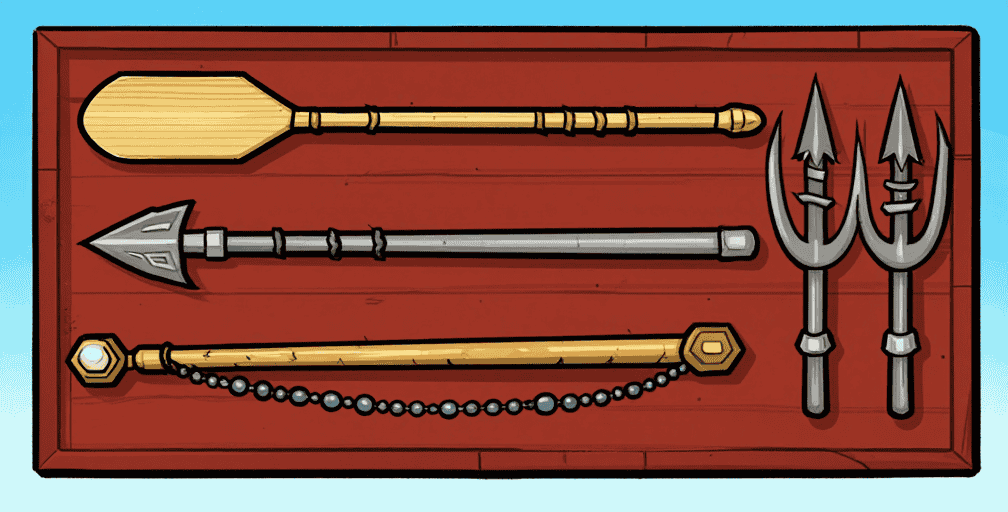
The Matayoshi family lineage combines karate (Kingai-ryū karate) with an exceptionally wide-ranging weapon curriculum. The style carries strong Chinese-influenced characteristics, reflecting the historical connections between the Ryukyu Kingdom and mainland China.
Nihon Kobudō Kyōkai Listing
Registered under the name 金硬流唐手沖縄古武術 (Kingai-ryū Karate & Okinawan Kobujutsu). Current representative: 又吉 靖 (Matayoshi Yasushi), listed as 宗家十七代目 (17th-generation sōke).
- Nihon Kobudō Kyōkai profile: https://www.nihonkobudokyoukai.org/martialarts/066/
- International hub: https://www.matayoshikobudo.org
Weapon Range
The Matayoshi curriculum includes an unusually wide selection of weapons:
| Category | Weapons |
|---|---|
| Staff weapons | Bō, Jō |
| Bladed | Kama (sickle), Nuntei (trident spear) |
| Flexible | Nunchaku, Surujin, Sansetsukon (3-section staff) |
| Polearms | Eku (boat oar), Kuwa (hoe/mattock), Yonsetsukun (4-section staff) |
| Thrust/Guard | Sai, Tekko |
| Shield | Tinbē (shield) |
| Iron | Tetsubō (iron truncheon) |
This breadth reflects the Matayoshi family's emphasis on preserving farming, fishing and everyday-object origins of Okinawan weapons.
Shared Kata Names with the Taira Line
Despite being organizationally distinct, Matayoshi kobudo and the Taira line share many kata names, such as Shushi no Kon, Sakugawa no Kon, Chatan Yara no Kon, Tsuken no Kon, Chōun no Kon, because both lineages draw from the same historical pool of Ryukyuan weapon kata. The choreographic versions differ; the family relationships are shared.
Lineage
Matayoshi Shinchin (又吉真仁)
    └── Matayoshi Shinpo (又吉真豊, 1921–1997)  ← primary 20th-century figure
            └── Multiple international students
                    └── Matayoshi Yasushi (又吉靖)  ← current sōke
Matayoshi Shinpo was based at the Kodokan dojo in Naha. His transmission has spawned several international organizations; the IMKA (International Matayoshi Kobudo Association) is one major hub.
Historical overview
In the early 20th century Matayoshi Shinko (又吉真光, 1888–1947) demonstrated kobudo to the Japanese emperor alongside Chojun Miyagi and Gichin Funakoshi. Following Shinko's death in 1947, his son Matayoshi Shinpo (1921–1997) continued the legacy, founding a dojo in the 1970s called the Kodokan (光道館) in Naha. In 1972 Shinpo created the Zen Okinawan Kobudo Renmei as a formal teaching organization. Today an estimated 2,000 dojos worldwide practice Matayoshi-lineage kobudo.
Sources
- Matayoshi Kobudo — Wikipedia: Full lineage history, Shinko/Shinpo biography, Zen Okinawan Kobudo Renmei founding (1972), ~2,000 dojos worldwide
- Nihon Kobudō Kyōkai — Matayoshi: Formal recognition listing with Matayoshi Yasushi as current representative
- Okinawan kobudō — Wikipedia: Context for the Matayoshi school within the Okinawan kobudo tradition
- International Matayoshi Kobudo Association: Current international organization