Students of Taira Shinken
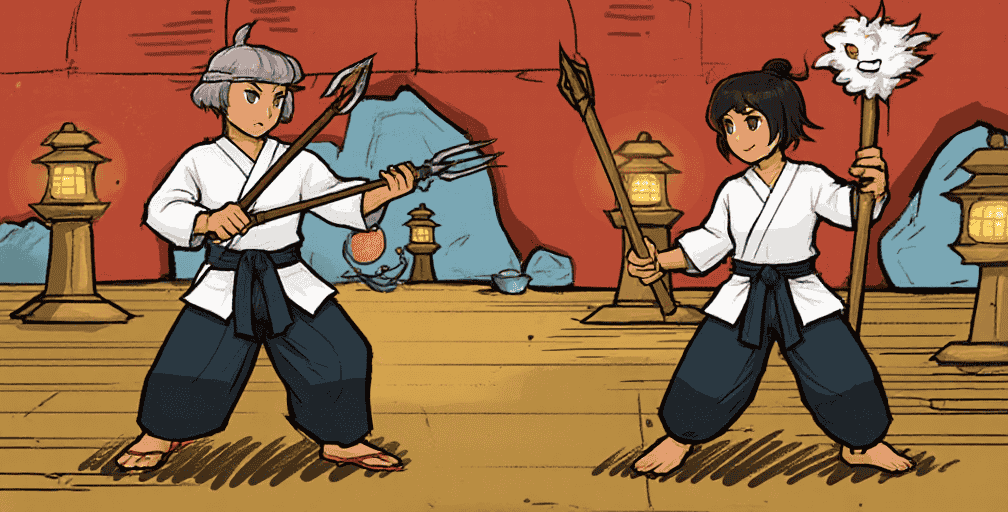
Taira Shinken left a small but influential group of senior students. Because most of them were already experienced karateka in different styles before studying kobudo under Taira, his material branched into several distinct technical traditions. This page profiles the eight best-documented students, followed by a note on others whose connection to Taira is credible but less fully documented.
See also: Taira Line: Ryukyu Kobujutsu for the main organizational heir, and Yabiku Moden for Taira's own primary kobudo teacher.
Summary Table
| Student | Karate base | Kobudo style created or led | Organization |
|---|---|---|---|
| Inoue Motokatsu | Shindo Jinen-ryu (Konishi) | Ryukyu Kobujutsu Hozon Shinkokai | Yuishinkai |
| Akamine Eisuke | Yamane-line bo + Taira | Ryukyu Kobudo (Okinawa branch) | Okinawa Hozon Shinkokai |
| Nakamoto Masahiro | Taira-Akamine line | Okinawan Traditional Kobudo | Bunbukan |
| Inoue Kisho | Yuishinkai (son of Motokatsu) | Ryukyu Kobujutsu (current head) | Hozon Shinkokai |
| Shimabuku Tatsuo | Isshin-ryu karate | Isshin-ryu weapon curriculum | Isshin-ryu dojo network |
| Uehara Seikichi | Motobu Udun-di | Motobu Udun-di (weapons within) | Motobu-ryu |
| Sakagami Ryusho | Itosu-ha Shito-ryu | Ryukyu Kobudo Kongo-ryu | Itosu-ryu federation |
| Hayashi Teruo | Hayashi-ha Shito-ryu | Okinawa Kobudo Kenshin-ryu | Japan Kobudo Kenshin-ryu-Kai |
Inoue Motokatsu (井上元勝)
Role: Principal mainland heir; systematizer of Taira's full curriculum
Before studying under Taira, Inoue had trained under Fujita Seiko and Konishi Yasuhiro (Shindo Jinen-ryu). He was directed by his own teachers to study Ryukyu kobudo from Taira. He received all 42 traditional weapons kata directly from Taira and, on Taira's instruction, developed a complete technical training framework for each of the eight weapons: tsukaikata (usage techniques), kihon, basic kumite, and bunkai kumite.
He subsequently published three hardcover volumes documenting the 42 kata and eight paperback manuals covering individual weapons (the Ryukyu Kobudo Kihon-waza Series, 1970s). These books are catalogued in the National Diet Library (NDL Search) and explicitly credit Taira as the source of the kata. Because Inoue received menkyo kaiden, these publications represent direct codification of Taira's curriculum.
His bujutsu background gave the mainland Taira line its characteristic emphasis on paired practice and applied bunkai. He also founded Yuishinkai, a karate organization drawing on Konishi's Shindo Jinen-ryu.
Organizations: President of Ryukyu Kobujutsu Hozon Shinkokai after Taira; head of Yuishinkai Karate.
Akamine Eisuke (赤嶺栄亮)
Role: Okinawa successor; bridge between Yamane-line bo and the Taira system
Akamine Eisuke brought a dual background to his study under Taira. Before working with Taira, he had already trained Yamane-line bo directly from students of Chinen Sanda, acquiring Sakugawa no Kun, Shushi no Kun, Yonekawa no Kun, Shirotaru no Kun, and others from that separate tradition. His subsequent study under Taira made him a bridge between the Yamane-Chinen bo lineage and Taira's broader multi-weapon system.
After Taira's death in 1970, Akamine became the second president of the Ryukyu Kobudo Hozon Shinkokai in Okinawa. Where kata names coincide between the two traditions (Sakugawa, Shushi, Shirotaru), his versions preserve Yamane flavor within the Taira naming framework.
Organizations: Head of Okinawan Ryukyu Kobudo Hozon Shinkokai.
Nakamoto Masahiro (仲本政博)
Role: Major Okinawan kobudo author and teacher; holder of Okinawan intangible cultural heritage designation
A Chinese-language survey of Okinawan kobudo based on Japanese sources explicitly lists Nakamoto as "one of Taira Shinken's direct students" and describes him as one of the most significant branches of Okinawan kobudo descending from Taira. He also trained under Akamine Eisuke and is often described in Okinawan media as a successor within the Taira-Akamine line.
He is the author of two foundational reference works:
- Okinawa Dento Kobudo: Shokyu — Sono Kata to Oyo (Bunbukan, 1989)
- Okinawa Dento Kobudo: Sono Rekishi to Tamashii (Bunbukan, 1993)
Both books are catalogued in the National Diet Library and in the Okinawa Prefectural Library's recommended reading list for karate and kobudo research. The Okinawa Karate Kaikan lists them as key references for traditional Okinawan kobudo.
Organizations: Head of Bunbukan (文武館).
Inoue Kisho (井上貴勝)
Role: Current president of Ryukyu Kobujutsu Hozon Shinkokai; second-generation heir
The eldest son of Motokatsu Inoue. Although he is a second-generation student (a student of Motokatsu rather than directly of Taira), his entire curriculum is presented as "Taira Shinken's Ryukyu Kobujutsu" and he devotes his work to preserving and promoting this system. He is listed as the current representative of Ryukyu Kobujutsu in the Nihon Kobudo Kyokai register.
He serves as President of both the Ryukyu Kobujutsu Hozon Shinkokai and the Yuishinkai (the karate organization his father founded), maintaining the Taira-Inoue syllabus intact while emphasizing karate-kobudo integration.
Organizations: Ryukyu Kobujutsu Hozon Shinkokai (Japan HQ); Yuishinkai Karate.
Shimabuku Tatsuo (島袋龍夫)
Role: Founder of Isshin-ryu karate; primary vector for Taira kata into the Isshin-ryu tradition
Shimabuku Tatsuo trained with Taira in kobudo and incorporated Taira-line kata into the Isshin-ryu weapon curriculum. The Isshin-ryu standard weapon set includes Tokumine no Kun and Urashi no Kun (bo kata) and Chatanyara no Sai (sai kata), all of which are traced back to Taira and his circle.
Isshin-ryu's characteristic stances, upper body posture (vertical fist, compact movements), and power generation give these kata a distinct feel compared to their Taira-line versions, a clear example of how a karate style reshapes inherited kobudo while retaining the names and broad movement pattern (embusen).
Organizations: Isshin-ryu karate, practiced internationally.
Uehara Seikichi (上原清吉)
Role: 12th-generation head of Motobu Udun-di; listed among Taira students in survey sources
A Chinese-language survey of Okinawan kobudo lists Uehara Seikichi alongside Matayoshi Masahiro, Nakamoto Masahiro, and others as disciples of Taira in the "classical Ryukyu weapons" line. While Uehara is best known for Motobu Udun-di (the royal palace art of the Motobu family), his kobudo repertoire includes weapon methods that share kata names and principles with Taira-line kobudo.
Motobu Udun-di is registered with the Nihon Kobudo Kyokai as Ryukyu Okesahiden Motobu Udundi (current representative: Motobu Chosen).
Organizations: Motobu-ryu / Motobu Udun-di.
Sakagami Ryusho (坂上隆祥)
Role: Received Taira's first-ever shihan license; founder of the oldest Ryukyu kobudo dojo on the Japanese mainland
Sakagami Ryusho was the third-generation head of Itosu-ha / Itosu-kai Shito-ryu karate (the Itosu-ryu line: Itosu Anko → Mabuni Kenwa → Sakagami Ryusho → Sakagami Sadaaki). In the mid-1950s he invited Taira to his home and honbu dojo in Tsurumi (Yokohama area) to deepen his kobudo knowledge.
Taira formally recognized him with the first shihan license he ever awarded (1959), followed by 8th dan in kobudo (1963). An English biography on the Itosu-kai side confirms: "Sakagami Sensei continued with the study of Ryukyu Kobudo under the direction of Grandmaster Shinken Taira who awarded him a Shihan licence in 1959, and later promoted him to the level of 8th Dan, Kobudo in 1963."
The Kongo-ryu official site states in Japanese: "Kongo-ryu is a kobudo school founded by the martial artist Sakagami Ryusho, who received the first shihan menjo from Master Taira Shinken, called the restorer of Ryukyu kobudo."
He founded Ryukyu Kobudo Kongo-ryu (琉球古武道金剛流), described as the oldest Ryukyu kobudo dojo on mainland Japan. Instructional DVD series for bo, sai, nunchaku, tekko, and kama have been published under the Kongo-ryu name. His son Sakagami Sadaaki is the current shuseki shihan of Kongo-ryu and head of Itosu-ryu.
Organizations: Itosu-ryu Karatedo International Federation; Kongo-ryu kobudo.
Hayashi Teruo (林輝男)
Role: "Leading disciple" of Taira per 1964 Japanese print source; founder of Kenshin-ryu
A 1964 Japanese publication (Jinbutsu Orai Rekishi Dokuhon, Jinbutsu Oraisha) describes Hayashi Teruo as "a leading disciple who learned kobudo under Mr. Taira Shinken." It also explains that the name of his kobudo school, Kenshin-ryu, was formed by combining one character from each of his two main teachers: "Ken" from Nakaima Kenko (Ryuei-ryu karate) and "Shin" from Taira Shinken. This naming convention makes the dual lineage literally visible in the school's name.
Hayashi founded Kenshin-ryu in 1961 (Showa 36). The official Hayashi-ha site states: "Okinawa Kobudo Kenshin-ryu was founded in Showa 36 (1961) by first-generation soke Hayashi Teruo." The international Shito-ryu organization chart identifies him as "Soke Hanshi 10th Dan Okinawa Kobudo Kenshin-Ryu" and founder/president of the Japan Kobudo Kenshin-ryu-Kai.
His karate base was Hayashi-ha Shito-ryu-kai, for which he served as founder and soke, and he held director positions in the Japan Karatedo Federation (JKF).
Organizations: Hayashi-ha Shito-ryu-kai; Okinawa Kobudo Kenshin-ryu / Japan Kobudo Kenshin-ryu-Kai.
Less Documented Connections
A small number of further practitioners are described in dojo histories and web interviews as having trained kobudo under Taira, but the evidence is less clearly anchored to library-level print sources:
- Matayoshi Shinpo (又吉真豊, 1921–1997) — widely acknowledged as having exchanged kobudo knowledge with Taira; some sources list him as a disciple, but his primary lineage is through his father Matayoshi Shinko.
- Nakazato Joen and other Shorin-ryu masters — adopted Taira bo and sai kata into their kobudo programs; some dojo histories claim direct training but documentation is fragmentary.
Sources
- Ryukyu Kobujutsu Hozon Shinkokai — genealogy: Inoue Motokatsu's receipt of all 42 kata from Taira; creation of the kihon/kumite framework; Inoue Kisho as current head
- Budokai Kokoro — Kobudo: Inoue Motokatsu background and published works
- NDL Search — Ryukyu Kobudo Kihon-waza Series: Inoue Motokatsu's publications catalogued in National Diet Library
- Kobudo Arakaki — about: Akamine Eisuke as Taira's successor in Okinawa; his prior Yamane-line training
- Okinawa Karate Kaikan — Nakamoto books: Nakamoto Masahiro's reference works on traditional Okinawan kobudo
- Nihon Kobudo Kyokai — Motobu Udun-di: Formal listing for Motobu Udun-di
- Itosu-ryu Kobudo — Kongo-ryu: Sakagami Ryusho as the recipient of Taira's first shihan license
- Kongo-ryu — About: Kongo-ryu founded by Sakagami Ryusho, described as the oldest Ryukyu kobudo dojo on mainland Japan
- Shitoryu.org — Sakagami biography: Shihan license 1959 and 8th dan 1963 from Taira
- Ryukyu Bugei — Hayashi 1964 article: Translation of 1964 Japanese print source naming Hayashi as "leading disciple" of Taira; Kenshin-ryu naming etymology
- Hayashi-ha — Kenshin-ryu: Official statement that "Okinawa Kobudo Kenshin-ryu was founded in Showa 36 (1961) by first-generation soke Hayashi Teruo"
- Isshin-Concentration — Taira Shinken Kobudo: Shimabuku Tatsuo's kobudo training under Taira; Isshin-ryu weapon kata sources
- Research page: Primary bibliographic sources for Taira lineage documentation