Weapon Maintenance
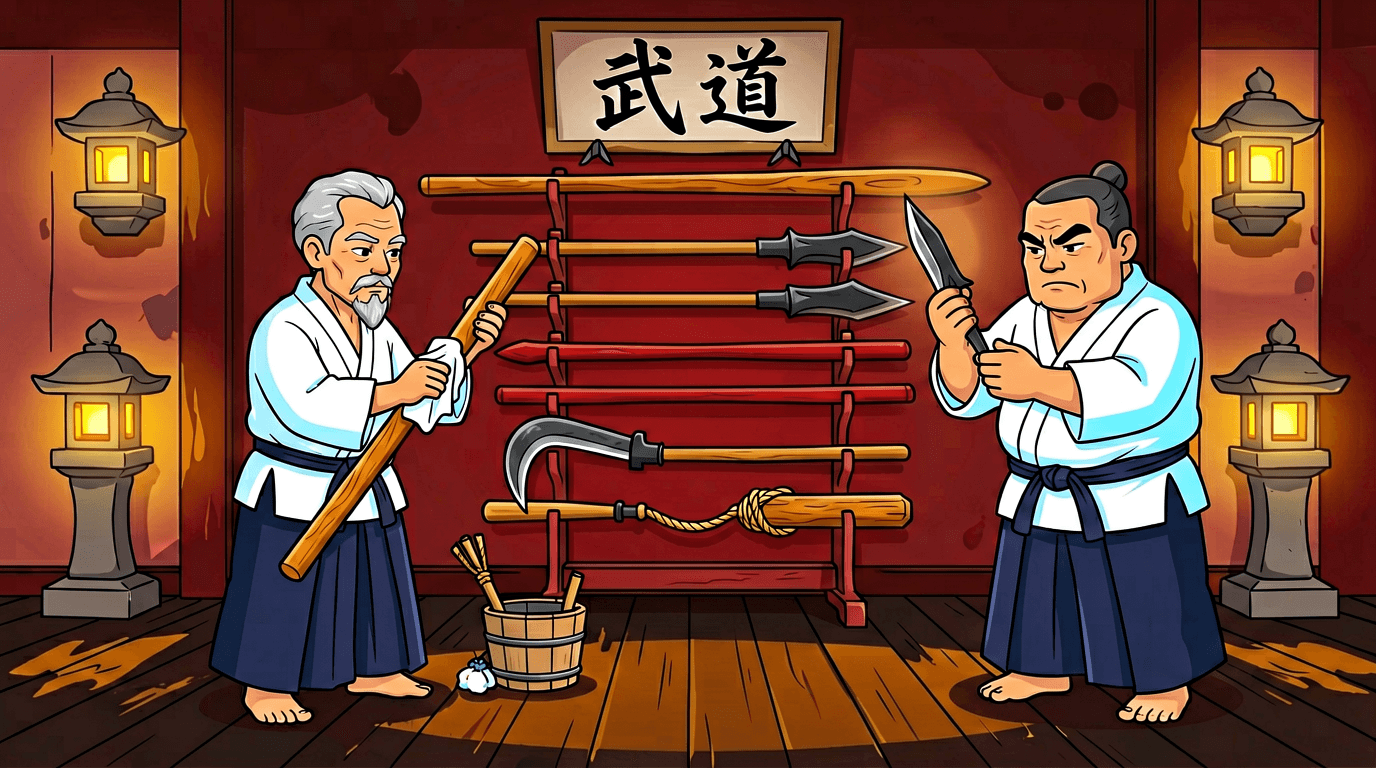
Karate and kobujutsu training weapons last longer, feel better in use, and remain safer when maintenance is matched to the material rather than treated as a single routine for everything. Across the sources reviewed, the most reliable pattern is simple: keep wood clean and conditioned, keep metal dry and lightly protected, inspect cords and joints regularly, and avoid finishes or lubricants that remain wet enough to stain hands or white cotton uniforms.
Core Principles
The most effective maintenance routine begins immediately after training. Sweat, dust, skin oils, and floor grit gradually roughen wood and accelerate corrosion on metal, so wiping weapons down after every session is more important than occasional heavy treatment. Weapons should then be stored in a dry, ventilated place away from direct sunlight, radiators, damp floors, or long-term pressure that can contribute to warping, checking, or localized rust.
Routine inspection is equally important. Wooden weapons should be checked for dents, raised grain, cracks, and splinters; metal weapons should be checked for oxidation, sharp burrs, or coating wear; corded weapons should be checked for fraying, looseness, and abrasion at the holes or swivel points.
Wooden Weapons
Wooden implements such as bō, jō, eku, tonfa, and nunchaku handles respond best to periodic smoothing and light finishing rather than thick surface coatings. When the surface becomes rough from friction or humidity, sanding with the grain using progressively finer abrasive restores smoothness while minimizing new scratches or weak spots.
The best-performing oils for wood in this context are tung oil and boiled linseed oil, with tung oil generally the better option for frequently handled training weapons. Sources discussing martial arts wooden weapons consistently recommend these penetrating oils because they help resist drying and moisture exchange without building an excessively thick coating, and tung oil is often preferred when a less sticky hand feel is desired.
Best Oil for Wood
For weapons held with bare hands and used while wearing white cotton dōgi, polymerized tung oil or pure tung oil is the best overall choice. It offers the best balance of penetration, surface feel, and lower tackiness after curing, which reduces the chance of residue transferring to hands or clothing compared with a heavier or incompletely cured boiled linseed oil finish.
Boiled linseed oil remains a viable traditional alternative, especially where a warmer color or more classic finish is preferred, but it usually demands more careful wiping and more complete curing before the weapon is returned to practice. In practical dojo conditions, the key is not the amount applied but the restraint of the application: a thin coat, full wipe-down, and adequate cure time are safer and cleaner than repeated heavy coats.
Oak Weapons
Oak bō, jō, and other staff weapons are durable, but they still require maintenance because repeated impact and palm friction gradually raise the grain. The recommended treatment is to remove roughness with fine sanding, then apply a light coat of tung oil or boiled linseed oil, wiping away all excess so the stick does not feel oily in the hands.
If the oak weapon arrives with a thick varnish or lacquer and the user wants a more traditional matte grip, that surface can be sanded back before switching to an oil finish. This approach is particularly useful for practitioners who value grip feedback and want to avoid the slickness that some glossy factory coatings create.
Metal Weapons
Iron or steel sai demand a different strategy because the main threat is corrosion rather than drying. The basic routine is to remove sweat and fingerprints after handling, ensure the weapon is completely dry, and leave only a very thin protective film of oil or wax on the surface.
Best Oil for Metal
For bare hands and white cotton uniforms, the best metal treatment is not a heavy wet oil but a minimal application of light mineral oil, gun oil, or another corrosion inhibitor that can be buffed nearly dry. The aim is to leave enough protection to slow oxidation while avoiding the oily transfer that can mark sleeves, cuffs, or obi.
Among practical choices, a thin mineral-based protective oil or a rust-prevention product that dries to a waxy film is better suited to dojo use than thicker lubricants. After application, the metal should be wiped again until it feels dry to the touch, because excess residue is usually the cause of staining rather than the protective product itself.
Rust Removal
When rust first appears on sai, the safest response is light removal rather than aggressive grinding. Fine abrasive pads, fine steel wool used carefully, or very fine abrasive paper can remove surface oxidation, after which the weapon should be cleaned and re-protected with a thin film.
Nunchaku and Cord Materials
Nunchaku maintenance includes both the wood and the connector. The connector experiences concentrated wear, so durability depends heavily on cord material, hole finish, and regular replacement before visible failure.
Best Rope
For rope-style nunchaku, nylon and Kevlar are the strongest practical recommendations. Nylon offers a good balance of toughness, flexibility, and availability, while Kevlar generally offers greater abrasion resistance and durability when long-term service life matters most.
Cotton cord and generic soft string are less suitable for heavy training because they fray faster and absorb more sweat and moisture. Chain is the most wear-resistant connector overall, but it changes the handling characteristics and does not suit every line of nunchaku practice, especially where a rope-style feel is preferred.
Best Body Materials
For the handles themselves, dense hardwoods are the most durable choice for impact training. Sources discussing durability identify hickory and hard maple as especially robust, while oak remains a strong practical option and is widely used in training weapons.
Recommended Maintenance Routine
A practical maintenance schedule can be organized as follows:
- After every session: wipe away sweat, dust, and fingerprints from all surfaces.
- Weekly or as needed: inspect wood for splinters, metal for rust, and cords for fraying or looseness.
- When wood feels rough: sand lightly with the grain using fine abrasive, then apply a very thin coat of tung oil and wipe dry.
- When metal shows dryness or early oxidation: apply a minimal amount of protective oil, then buff until almost no residue remains.
- When nunchaku cord shows wear at the holes or center span: replace it before failure rather than after breakage.
Best Overall Choices
For practitioners who handle weapons with bare hands and train in white cotton uniforms, the cleanest and most effective combination is tung oil for wood and a very lightly applied, thoroughly buffed protective oil or dry-film rust inhibitor for metal. For nunchaku, Kevlar is the best rope choice where maximum durability is the priority, while nylon is the best all-around compromise between durability, flexibility, and ease of replacement.
Sources
- The care of your fine wooden weapons — Martial Talk
- Using and Maintaining Wooden Weapons Responsibly — Makatai Aikido Club
- Looking after wooden weapons — Ninjutsu UK
- Weapon Maintenance — Rogue Steel
- Cuidado y Mantenimiento de Armas de Madera en Artes Marciales — Ranai Dojo
- Sai and rust — Karate Forums
- The materials — Nunchaku SFW
- Essential Care and Maintenance Tips for Your Bokken and Jo Staff — Blizniaks Bokken
- What oils are best to use on wooden martial arts staffs? — Scrap Wood Martial Arts
- Oiling your wooden weapons — Karate Forums
- Training sword maintenance — Prevention — Hroarr
- How to Prevent Rust on Swords, Kukris, Machetes, and Knives — Everest Forge
- Good, low-odor, non-toxic oils for tools — EEVBlog
- Martial Arts Weapons, Durability Factor 101 — USA Nunchaku