Sai (釵)
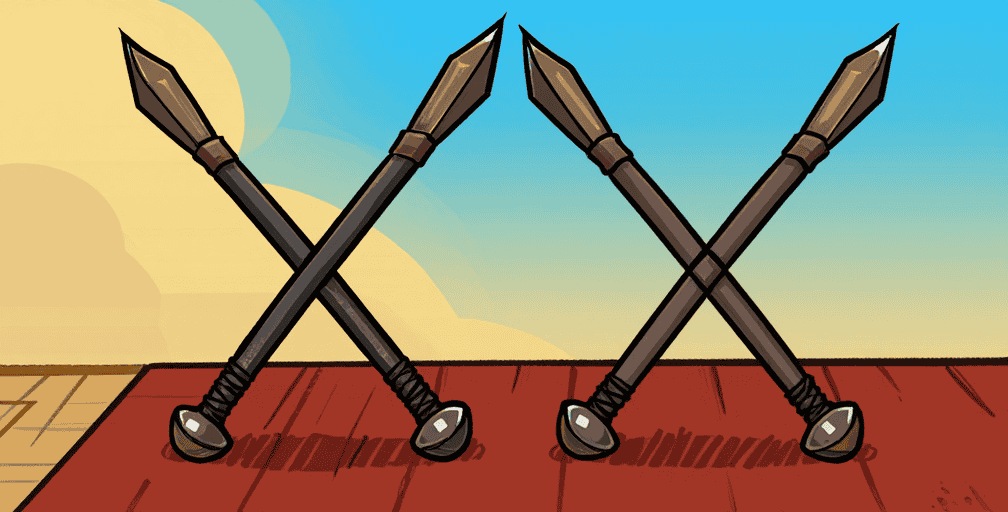
The sai (釵) is a metal weapon consisting of a central shaft with two curved side tines (yoku). Practiced in pairs or as a set of three (two held, one thrown), the sai is the second most kata-rich weapon in the Taira curriculum, with eight kata attributed to the lineage.
Physical Characteristics
| Property | Detail |
|---|---|
| Length | ~45–55 cm total |
| Central shaft | Octagonal or round metal rod |
| Side tines | Curved upward, used to trap opponent's weapon |
| Weight | ~550–700 g each |
Use and Strategy
The sai's primary tactical function is the trap-and-counter: the tines can catch a bō or blade, immobilize it, and create an opening for a central-shaft thrust or strike. The weapon can also be flipped (kaeshi) in the hand to use the handle end for close-range strikes.
The three-sai practice reflects a traditional use where one is thrown to distract or injure while retaining two for close combat.
Historical Origins
The 揆奮館 article describes sai as a capture weapon used by officials (役人) to arrest and control people, functionally similar to Japan's jitte but typically used in pairs or trios in Okinawa. Sai technique is built around both defense and offense: used to receive and trap swords, poles, or other weapons, then strike or lock joints; throwing sai is also mentioned as part of the classical repertoire.
Several modern dojo pages and seminars by Okinawan institutions present sai as a non‑bladed metal weapon suited to the Ryukyuan legal environment (where swords were restricted), reinforcing this "law‑enforcement tool" origin rather than an agricultural one.
According to Ryukyu Kobudo sources, the character for sai (釵) means "hairpin" but the weapon may have originated from Indian Buddhist implements shaped like the human body. In the Ryukyu Kingdom era, officials called ufuchiku (大筑, similar to modern police chiefs) carried sai as symbols of rank and for self‑defense, crowd control, and guidance duties.
Kata Families
The Taira line preserves eight sai kata organized in three family clusters. See Sai Kata for the full structural analysis:
Hamahiga family: Hamahiga no Sai → Hamagotenyaka no Sai, Hantagwa no Sai
Tsuken–Chatan–Tawada family: Tsuken Shitahaku no Sai, Chatan Yara no Sai, Tawada no Sai
Kochijo–Jigen pair: Kochijo no Sai ↔ Jigen no Sai
The Manji-Sai
The Jigen no Sai kata is performed with the manji-sai (卍釵), a variant where the side tines curve in opposite directions (one up, one down). This variant was Taira Shinken's own creation for the Jigen kata. The asymmetric tines create distinct trapping and blocking options compared to standard sai.
Sources
- Sai (weapon) — Wikipedia: History (approved for Okinawan kobudō use 1668 by Moto Chohei), parts (monouchi, yoku, tsume, moto, tsuka, tsukagashira), use by domestic police (ufuchiku)
- Taira Shinken — Wikipedia: Confirms the manji-sai is Taira's own creation
- Okinawan kobudō — Wikipedia: Confirms 8 sai kata in the Taira curriculum
- 琉球古武道武器術 — 揆奮館流武術: Sai as capture weapon for officials, defense and offense techniques, throwing applications
- Okinawa Traditional Karate — Cabinet Office: Non-bladed metal weapon suited to Ryukyuan legal environment
- Ryukyu Kobudo Weapons: Character meaning (hairpin), Indian Buddhist origin theory, ufuchiku officials' use for rank and duties
- 琉球古武術 — Japanese Wikipedia: Sai characteristics and historical usage