Tinbē-Rochin (ティンベー・ロチン)
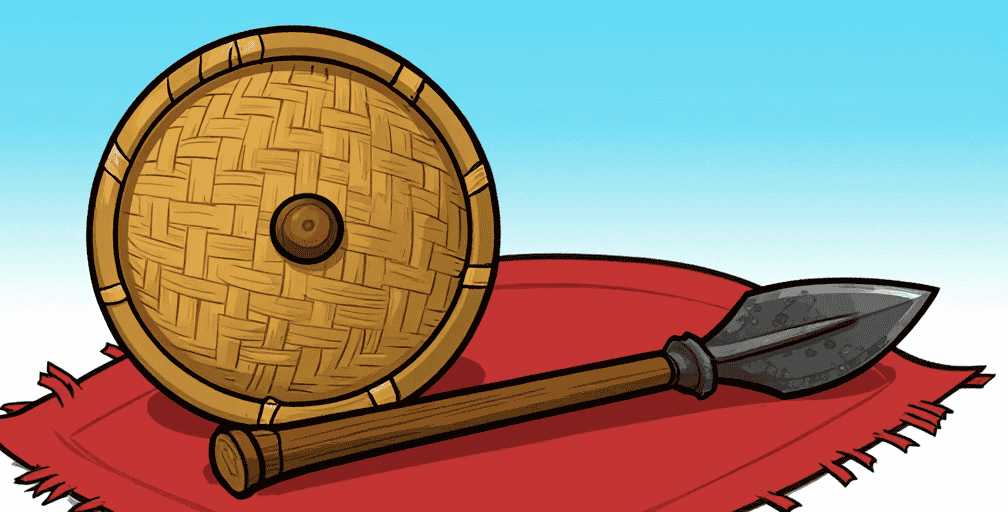
The Tinbē-Rochin (ティンベー・ロチン) is a paired-weapon combination: the tinbē is a small round shield traditionally made from rattan, leather, or turtle shell, while the rochin is a short spear or blade. The combination is one of the most visually distinctive in Ryukyu kobudo and the only weapon pair that combines defense-object and offense-weapon as a unit.
According to the JRKF "What is Ryukyu Kobudo" page, the tinbē (shield) and rōchin (short spear) form a paired weapon set. Shields were traditionally made from rattan, leather, or turtle shell, while rōchin could be a short spear or machete‑like blade (seiryuto / 青龍刀), and both could be used for feints, blinding, cutting, and thrusting. Modern tinbē may be made from light alloys or wood, but the tactical idea remains: use the shield for protection, vision disruption, and edge strikes, while the rochin stabs and cuts, echoing southern Chinese shield‑and‑spear systems.
揆奮館 traces tinbē techniques back to southern Shaolin (南派小林拳の流れをくむ) and asserts that they were in actual use by the Three Kingdoms (三山) period, making tinbē one of the oldest layers of Ryukyuan weapon practice.
Physical Characteristics
| Component | Property | Detail |
|---|---|---|
| Tinbē (shield) | Size | ~45 cm long × 38 cm wide |
| Traditional material | Sea turtle shell or woven cane/vine | |
| Modern substitute | Hardened leather or wood | |
| Rochin (spear) | Length | Equivalent to the length of the forearm |
| Form | Short spear, short sword or machete (seiryuto) shape | |
| Material | Metal, bone, or hardwood |
Tactical Logic
This combination is unusual by international standards, as most weapon systems do not pair a dedicated defense implement with an offensive weapon. The tinbē enables fighting at close range where a long weapon would be unwieldy: the shield deflects, the rochin thrusts or cuts in the same motion. Movement is typically low and evasive, using the shield to create angles while the rochin exploits openings.
Kata
The Taira curriculum includes one primary tinbē-rochin kata:
- Hamahiga no Tinbē (浜比尌のティンベー): The foundational kata covering footwork, shield angles, and thrusting combinations. Movement is typically circular to avoid excessive contact with the shield, with the rochin used predominantly in upward stabbing motions targeting vulnerable points under the rib cage, armpits, and throat. Matayoshi Kobudo preserves a related kata: Timbei no Kata, using the shield with a seiryuto (machete-style blade) rather than a spear.
Sources
- Tinbe-rochin — Wikipedia: Physical dimensions (shield ~45 cm × 38 cm; rochin = forearm length), materials, circular technique description, upward stabbing applications
- Okinawan kobudō — Wikipedia: Confirms one tinbē-rochin kata in the Taira curriculum
- Matayoshi Kobudo — Wikipedia: Matayoshi version: Tinbei+Seiryuto (shield + short sword), Timbei no Kata
- JRKF — What is Ryukyu Kobudo: Tinbē-rōchin as paired weapon set, traditional materials (rattan, leather, turtle shell), rochin variants (short spear, seiryuto blade), tactical uses (feints, blinding, cutting, thrusting)
- Ryukyu Kobudo Weapons: Modern materials (light alloys, wood), shield protection and vision disruption tactics, southern Chinese shield-and-spear system connections
- 琉球古武道武器術 — 揆奮館流武術: Southern Shaolin lineage (南派小林拳), Three Kingdoms (三山) period usage, oldest layer of Ryukyuan weapon practice