Ryukyu-kuningaskunnan aikakausi
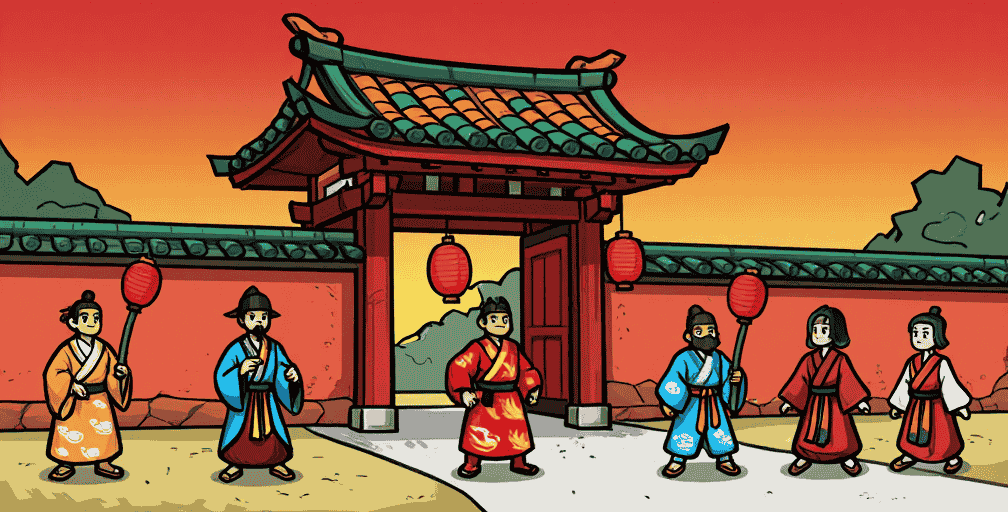
Ryukyu-kuningaskunta yhdisti Okinawan saaret kuninkaan Shō Hashin alaisuudessa vuonna 1429, aloittaen vuosisatoja kestäneen kauden merenkulun kauppakeskuksena, joka yhdisti Japanin, Kiinan, Korean ja Kaakkois-Aasian. Tämä asema muokkasi kulttuuria ja sotilaallista harjoittelua omaleimaisesti.
Pechin-luokka
Pechin (佩冠親雲上) olivat Ryukyu-kuningaskunnan tutkija-sotilasvirkamiehiä. He olivat aatelispatenttien haltijoita, jotka työskentelivät kuninkaallisessa hovissa, hoitivat aluehallintoa ja toimivat sotilaallisina virkamiehinä. Toisin kuin japanilaiset samurait, Pechin eivät olleet taistelulla määrittyvä periytyvä sotilaallinen aristokratia; he olivat koulutettuja virkamiehiä, jotka myös ylläpitivät sotilaallisia taitoja.
Aseellisten taitojen säilyttäminen ja siirto tapahtuivat Pechin-perheissä ja mestari–oppilas-suhteissa tietyissä kylissä ja kaupungeissa. Katan nimiin sulautetut paikannimet, kuten Chatan (北谷), Tsuken (津堅), Urasoe (浦添) ja Hamahiga (浜比嘉), heijastivat näiden linjojen maantieteellistä jakautumista saarilla.
1609 Satsuma hyökkäys
Vuonna 1609 Etelä-Japanin Satsuma hyökkäsi ja alisti Ryukyu-kuningaskunnan, luoden kaksoisalistussuhteen, jossa kuningaskunta säilyi mutta maksoi tributia sekä Satsumalle että Kiinalle. Tämän tapahtuman vaikutus aseharjoitteluun on kiistanalainen.
Suosittu kerronta ”aseiden takavarikoinnista” on merkittävästi monimutkaisempi kuin usein esitetään. Vuoden 1509 kaiverrus "百浦添欄干之銘" (Momourasoe-no-Kanmei) kertoo, että kuningas Shō Shin toteutti miekan metsästyksen (刀狩り), jossa aseet takavarikoitiin hoviylimystöltä ja varastoitiin kuninkaalliseen asearsenaaliin Shuri-linnassa. Tulkinta on olennainen: kaiverrus osoittaa kuningaskunnan keskittäneen aseet kuninkaallisen vallan alle pikemminkin kuin poistaneen ne kokonaan. Satsuman hyökkäys 5. huhtikuuta 1609 toi lisärajoituksia aseille. Valloituksen jälkeen Shimazu-klaani asetti oman kiellon tavallisten kansalaisten miekkojen hallussapidolle. Nämä tapahtumat yhdessä muovasivat tilanteen, jossa aseharjoittelu säilyi pääasiassa Pechin-luokan piirissä pikemminkin kuin leviten laajasti.
Moderniin aikaan
Kun japanilainen Meiji-hallitus virallisesti lakkautti Ryukyu-kuningaskunnan 27. maaliskuuta 1879 tapahtumassa nimeltä Ryūkyū shobun (琉球処分), sosiaaliset rakenteet, jotka olivat kannatelleet muodollista sotilaallista siirtoa, purettiin. Okinawa liitettiin Japanin prefektuuriksi. Seuraavan sukupolven harjoittajat säilyttivät vastaanottamansa tiedon usein epämuodollisesti, kunnes 1900-luvun alussa heräsi uudelleen kiinnostusta systematisointiin sellaisten hahmojen kuin Yabiku Moden ja myöhemmin Taira Shinkenin yhteydessä.
Lähteet
- Ryukyu Kingdom — Wikipedia: Kuningaskunnan historia, 1429 yhdistäminen, 1609 Satsuma hyökkäys, 1509 miekan metsästyksen kaiverrus, 1879 poistaminen
- Okinawan kobudō — Wikipedia: Pechin-luokka harjoitti aseellisia taitoja; maataloustöiden alkuperiteoria arvostellaan
- Tutkimus-sivu: Ensisijainen ja toissijainen bibliografinen lähde Ryukyun historialle ja kobudolle