Katan nimien sukusuunta: Tarina kokonaisuudessaan
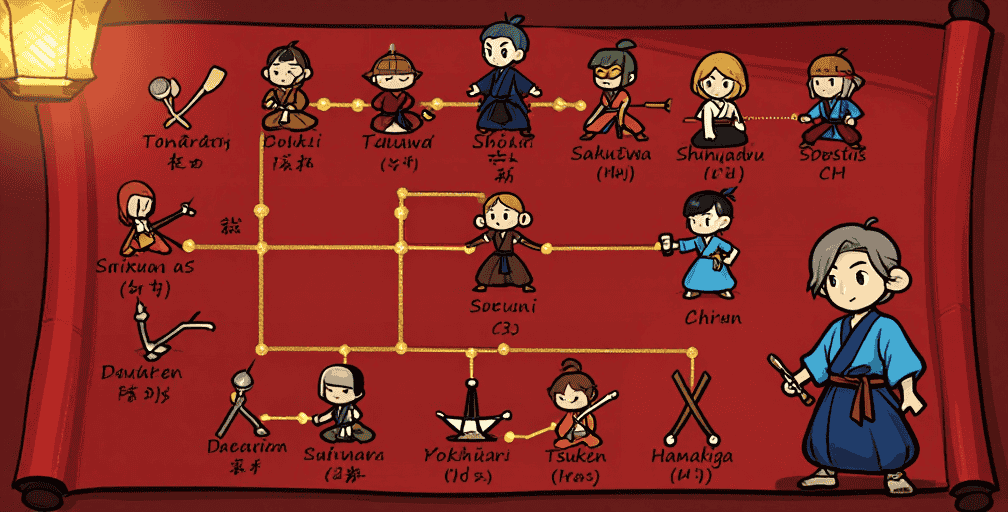
Alla on kattava analyysi suurista Ryukyu kobudon katanperheista, joista jokainen linkittaa kataa aseeseen, paatyylejeihin, jotka kayttavat sita, ja uskottavimpaan alkuperaan/luojaattribuaatioon. Tama paljastaa kompleksisen verkon historiallisista suhteista eri sukusuuntien valilla ja kuinka katat kehittyivat useiden perinteiden yli.
Shūshi / Shushi / Shuji no Kon (周氏の棍)
Ase: Rokushaku bō (keppi).
Päätyylit:
- Yamane/Yamanni‑ryū (Chinen-linja: Masami Chinen → Kishaba Chōgi → Oshiro Toshihiro / RBKD). thekaratepage
- Taira-linjan Ryūkyū Kobudō / Ryūkyū Kobujutsu Hozon Shinkōkai (Shushi no Kon Sho ja Dai). ja.wikipedia
- Matayoshi kobudō ja monet karate-kobudo-ohjelmat (Shōrin‑ryū, Shotokan, Shitō‑ryū jne.). reddit
Alkuperä / luoja (kilpailevat teoriat):
- Chinen Sanda (Yamani‑no‑Chinen) – Patrick McCarthy liittää Shūji no Kunin Chinen Sandaan osana Yamane‑ryū-kokoelmaa. koryu-uchinadi
- Soeishi Pechin – Nakamoto Masahiro huomauttaa samankaltaisuuksista Soeishi no Koniin ja ehdottaa, että Soeishi olisi saattanut luoda Shushi no Konin; Bugei Ryūha Daijiten toteaa, että Shushi no Kon on Soeishin tekemä. kodokanboston
- Kiinalainen mestari Shū (Zhou) – Hokama Tetsuhiro ja Zen Okinawa Kobudo Renmeinin Okinawa Kobudo Kyohon kertovat, että noin vuonna 1831 Shanghaista kotoisin oleva bōjutsu-mestari nimeltä Shu (Zhou) opetti Nahassa Asatossa lähellä Sōgenjiä; hänen bōjutsustaan tuli tunnettu nimellä Shūshi no Kon. thekaratepage
Yhteydet: Kata on solmukohta, jossa Chinen/Yamane-perhe, Soeishi-perhe ja kiinalainen Shu/Zhou-kertomus kohtaavat. Tairan Shushi no Kon Sho/Dai yhdistää todennäköisesti aiemman Yamane-version Choun no Konin ja Soeishi-linjan materiaalin kanssa. Katso Yamane-ryū avain-katat ja Taira-linjan opetusohjelma tyylikohtaisille muunnoksille. koburyu
Sakugawa no Kon (佐久川の棍)
Ase: Bō.
Päätyylit:
- Yamane/Yamanni‑ryū (Chinenin perheen klassinen kokoelma). en.wikipedia
- Taira-linja (Sakugawa no Kon Sho/Chu/Dai). ja.wikipedia
- Matayoshi kobudō; monet karate-kobudo-opetussuunnitelmat (Shōrin‑ryū, Isshin‑ryū jne.). vernonmasonkarate
Alkuperä / luoja:
- Laajasti tunnustettu Sakugawa Kangalle (Tōde Sakugawa). Useat historiikit kertovat hänen "kehittäneen bō-katan, Sakugawa no Konin," sen lisäksi, että hän välitti Kusankun. authenticancientarts
Yhteydet: Tämä on kanoninen Shuri-bō-kata; se esiintyy lähes jokaisessa suuressa kobudo-linjassa, usein ydin- tai välimuotona, tehden Sakugawasta keskeisen esi-isän sekä Yamanen että myöhempien Taira/Matayoshi-haarojen kannalta. Katso tyylien välinen vertailu muunnosyksityiskohtiin. karatekobudo
Chōun / Choun no Kon (朝雲の棍 / 趙雲の棍)
Ase: Bō.
Päätyylit:
- Taira-linja (Choun no Kon Ryūkyū kobudo -luetteloissa). ja.wikipedia
- Yamane‑vaikutteiset ja Matayoshi‑vaikutteiset opetussuunnitelmat (Choun no Kun monissa RBKD- ja kilpailuluetteloissa). rbkd-germany
Alkuperä / luoja:
- Kata-sanakirja (japanilaisiin lähteisiin perustuva) listaa luojaksi Soeishi Yoshiyukin ja huomauttaa, että Chōun/Choun on okinawalainen luenta kiinalaisesta nimestä Zhao Yun (Kolmen kuningaskunnan kenraali, joka on kuuluisa keihästaidostaan). alangodshaw
Yhteydet: Nähdään usein osana samaa Soeishi-bō-kata-perhettä kuin Shushi no Kon ja Soeishi no Kon, ja on joitain todisteita siitä, että modernia Shushi Sho/Daita laajennettiin Choun no Konin fraaseilla. Katso Taira-linjan opetusohjelma ja bō-kata-perheet. kodokanboston
Soeishi / Shiishi no Kon (添石の棍)
Ase: Bō.
Päätyylit:
- Taira-linja (Soeishi no Kon Sho ja Dai). ja.wikipedia
- Matayoshi; jotkut Yamane‑vaikutteiset linjat. reddit
Alkuperä / luoja:
- Vahva yhteisymmärrys (Nakamoto, Inoue, kata-sanakirjalähteet) siitä, että se on Soeishi Pechinin / Soeishi-linjan tekemä, ja Soeishi oli Shuri-aatelinen ja bōn mestari. alangodshaw
Yhteydet: Soeishi kuvataan tuotteliaana bōjutsu-luojana; jotkut lähteet liittävät Shushin, Chounin ja Soeishi no Konin kaikki Soeishiin, kun taas Yamane-puolen selonteot yhdistävät Shushin läheisemmin Chineniin. Katso bō-kata-perheet tyylivertailuja varten. koryu-uchinadi
Shirotaru / Shirataru no Kon (白樽の棍)
Ase: Bō.
Päätyylit:
- Yamane‑ryū klassinen kokoelma. mineralogicalrecord
- Taira-linja (Shirataru no Kon Sho ja Dai). ja.wikipedia
- Jotkut Shōrin‑ryū kobudo- ja Ryukyu-kobudo-ryhmät.
Alkuperä / luoja:
- Yamane‑ryū-lähteissä liitetään Chinen Sandaan tai hänen välittömiin seuraajiin osana Yamani Sanda–Masami Chinen -kokoelmaa. karatekobudo
Yhteydet: Havainnollistaa Yamanen vaikutusta Tairaan: Taira systematisoi Yamane-katan Ryukyu-kobudo-opetussuunnitelmaansa, ja myöhemmät muunnelmat esiintyvät Isshin‑ryūssa ja muissa karate-kobudo-ohjelmissa. Katso Yamane-ryū avain-katat ja bō-kata-perheet. thekaratepage
Yonekawa / Yunigawa no Kon (与根川の棍)
Ase: Bō (usein "vasenkätinen" tai Hidari Bō Yamanen käytössä).
Päätyylit:
- Yamane‑ryū (klassinen viisikko). mineralogicalrecord
- Matayoshi kobudō (Yonegawa no Kun edistyneenä katana). isshin-concentration.blogspot
- Vaikutteita Tokumine no Konin muunnelmissa.
Alkuperä / luoja:
- Pidetään Yamane‑ryū-katana, liitetty Chinen Masamin opetussuunnitelmaan. koryu-uchinadi
Yhteydet: Jotkut tutkijat väittävät, että Tokumine no Kon Isshin‑ryūssa on yksinkertaistettu ja uudelleennimetty Yonegawa no Kon (Shimabuku muokkasi ja uudelleennimesi sen), osoittaen kuinka Yamane-kata virtasi karate-kobudoon uudella nimellä. Katso bō-kata-perheet ja Yamane-ryū avain-katat. ryukyu-bugei
Tokumine no Kon (徳嶺の棍)
Ase: Bō.
Päätyylit:
- Matayoshi kobudō. youtube
- Isshin‑ryū karate-kobudo (kuuluisa nimellä Tokumine no Kun). isshin-concentration.blogspot
- Federaatio- ja avoin-tyyli-kobudo-luettelot.
Alkuperä / luoja:
- Yleisesti liitetty Tokumine Pechiniin, 1800-luvun okinawalaiseen miekkamieheen/karateisiin, joka karkotettiin Yaeyamaan; kata-sanakirja mainitsee "Tokumine Pechinin sauvan" ja kohtelee Tokuminea historiallisena luojana. ryukyu-bugei
- Kuten yllä, jotkut väittävät, että Isshin‑ryūn Tokumine on itse asiassa yksinkertaistettu Yonegawa no Kon uudelleennimettynä Shimabuku Tatsuon opetussuunnitelmassa. isshin-concentration.blogspot
Yhteydet: Sijaitsee Yaeyama‑peräisen bōjutsun, Yamane-tyylin muotojen ja myöhempien karate-kobudo-sovellutusten risteyksessä.
Tsuken / Chikin Bō & Tsuken Sunakake no Kon (津堅棒・津堅砂掛けの棍)
Ase: Bō ja eku (airo).
Päätyylit:
- Taira-linja (Tsuken Bō; Tsuken Sunakake no Kon eku-katana). ryukyukobudoshinkokai.wordpress
- Matayoshi kobudō (Tsuken no Kun; Chikin Aka Chu no Eku Di jne.). reddit
- RBKD ja Yamane‑vaikutteiset ryhmät listaavat Chikin Bōn/Tsuken Bōn ja Shinakachin/Sunakake no Kunin. en.wikipedia
Alkuperä / luoja:
- Paikannimestä johtuva: Tsuken-saari Okinawan kaakkoispuolella. Sunakaken etymologia: suna (hiekka) + kake (heittää) – kalastajat heittävät hiekkaa hyökkääjien silmiin. youtube
- Ryukyu Kobudo Shinkokai mainitsee Tsuken Sunakake no Konin kalastajien kehittämänä katana, jossa käytetään airoa aseena. ryukyukobudoshinkokai.wordpress
Yhteydet: Havainnollistaa kuinka paikalliset saaritaktiikat (airo + hiekka) muuttuivat muodollisiksi kotoiksi; sekä Taira että Matayoshi formalisoivat Tsuken-materiaalin järjestelmiinsä, ja RBKD säilyttää muunnelmat Yamanni-luettelossaan. Katso bō-kata-perheet, Taira-linjan opetusohjelma ja Yamane-ryū avain-katat. ryukyukobudoshinkokai.wordpress
Chatan Yara no Kon / Chatan Yara no Sai (北谷屋良の棍・釵)
Ase: Bō ja sai.
Päätyylit:
- Taira-linjan Ryūkyū kobudō. ja.wikipedia
- Isshin‑ryū (Chatan Yara no Sai ydin-sai-katana). aokkclub
- Shōrin‑ryū ja muut karate-kobudo-opetussuunnitelmat.
Alkuperä / luoja:
- Nimetty Chatan Yaran mukaan, 1700-luvun kamppailutaiteilijan Chatan-kylästä; John Sells ja muut tutkijat pitävät muotoja Yaran asemenetelmistä peräisin olevina. aokkclub
Yhteydet: Klassinen esimerkki henkilönimen katasta; Tairan versiot vaikuttivat Shimabuku Tatsuoon, joka oppi Chatan Yara no Sain Tairalta ja integroi sen Isshin‑ryūhun omalla kehomekaniikallaan. Katso sai-kata-klusterit ja Taira-linjan opetusohjelma. aokkclub
Hamahiga no Sai (浜比嘉の釵)
Ase: Sai.
Päätyylit:
- Taira-linja (yksi ydin-sai-kotoista). ryukyukobudoshinkokai.wordpress
- Jotkut moni-sukulinjan kobudo-organisaatiot.
Alkuperä / luoja:
- Paikannimestä johtuva: Hamahiga-saari (Okinawan edustalla). Yhtään yksilöllistä luojaa ei ole luotettavasti dokumentoitu; Tairan järjestelmä esittää sen alueellisena sai-perinteenä, joka kodifioitiin kata-muotoon. ryukyukobudoshinkokai.wordpress
Yhteydet: Käytetään "äiti-kaavana" Taira-linjan analyyseissa: sisäiset esseet huomauttavat, että monet hänen sai-kotoistaan (Hamagotenyaka no Sai, Hantagwa no Sai jne.) jakavat ydinrakenteen Hamahiga no Sain kanssa. Katso sai-kata-klusterit. isshin-concentration.blogspot
Tsuken Shitahaku no Sai (津堅志多伯の釵)
Ase: Sai.
Päätyylit:
- Taira-linja (keskeinen sai-kata). ja.wikipedia
- Federaatioiden kobudo-luettelot ja jotkut Matayoshi‑vaikutteiset ohjelmat.
Alkuperä / luoja:
- Nimetty Shitahakun (Shitahaku Pechin) mukaan Tsukeniilta; yksityiskohtaiset elämäkertatiedot ovat niukkoja, mutta kaava vastaa muita henkilö + paikka -nimeämisiä (kuten Chatan Yara). isshin-concentration.blogspot
Yhteydet: Muodostaa tiiviin alarypärkiteen Chatan Yara no Sain ja Tawada no Sain kanssa Tairan järjestelmässä (jaetut sekvenssit viittaavat yhteiseen vanhempaan kaavaan, jonka Taira laajensi kolmeksi nimettyksi kataksi). Katso sai-kata-klusterit. isshin-concentration.blogspot
Sakugawa / Kusanku -yhteys (tyhjäkäsi aseisiin)
Asiaan liittyvät katat: Kusanku (tyhjäkäsi), Sakugawa no Kon (bō).
Aseyhteys:
- Shōrin‑ryū-historian lähteet huomauttavat, että Sakugawa Kanga, opiskeltuaan Kusankun ja Takaharan johdolla, "kehitti bō-katan nimeltä Sakugawa no Kon" ja välitti Kusankun yhtenä Okinawan vanhimmista tyhjäkäsi-kotoista. authenticancientarts
Yhteydet: Havainnollistaa kuinka ase- ja tyhjäkäsi-sukulinjat kietoutuvat yhteen: sama historiallinen hahmo (Sakugawa) on keskeinen sekä suurissa karate-kata-linjoissa että perustavanlaatuisissa bō-kotoissa Yamanen, Tairan ja Matayoshin virtauksissa. Katso bō-kata-perheet. karatekobudo
Kuinka tämä verkosto laajenee
Tämä ei ole tietenkään kattava, mutta se antaa sinulle tekstuaalisen verkoston, jota voit laajentaa:
- Aloita kata-perheestä (esim. Shushi, Sakugawa, Tsuken, Tokumine, Chatan Yara).
- Huomioi minkä historiallisen henkilön tai paikan se liitetään.
- Luettele sitten mitkä moderniset tyylit (Yamane, Taira-linja, Matayoshi, Isshin‑ryū, Kenshin‑ryū, Kongo‑ryū, federaatio-kobudo) kantavat sitä, ja kuinka heidän suorituksensa tai nimeämisensä eroavat.
Kukin kata-nimiryhmä edustaa historiallista sormenjälkeä, joka on säilynyt useilla siirtymälinjoilla, tehden nimianalyysistä yhden tehokkaimmista välineistä Ryukyu kobudon monimutkaisen kehityksen ymmärtämiseen.