Taira-linja: Ryūkyū Kobujutsu
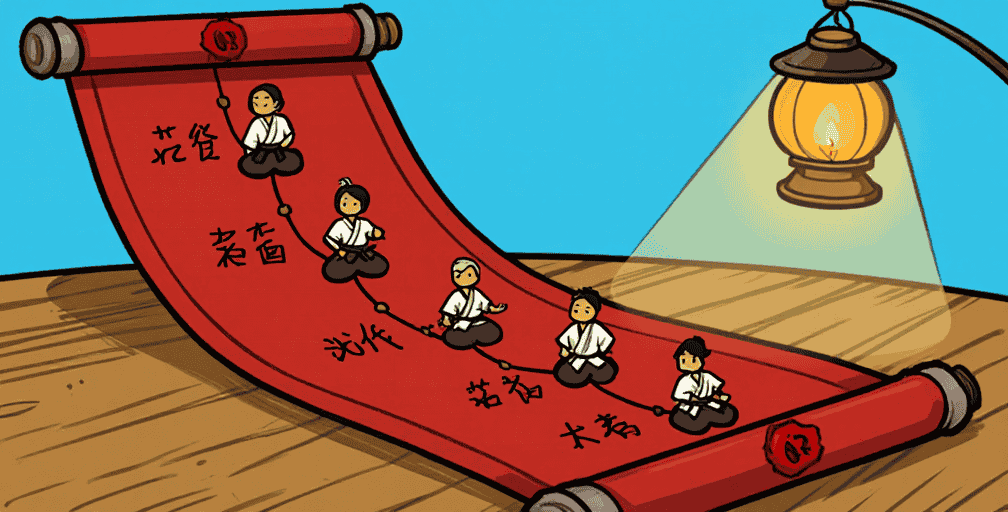
Taira-linja on laajimmin levinnyt yksittäinen sukusuunta Ryukyu kobudossa kansainvälisesti. Se juontaa suoraan Yabiku Moden → Taira Shinken → Inoue Motokatsu → Inoue Kishō, päähallintajärjestönä ollessa 琉球古武術保存振興会 (Ryūkyū Kobujutsu Hozon Shinkōkai).
Nihon Kobudō Kyōkai -listaus
Organisaatio on virallisesti rekisteröity Nihon Kobudō Kyōkaihin nimellä 琉球古武術 (Ryukyu Kobujutsu). Nykyinen edustaja: 井上 貴勝 (Inoue Kishō).
- Nihon Kobudō Kyōkai -profiili: https://www.nihonkobudokyoukai.org/martialarts/062/
- Organisaation sivusto: https://www.ryukyukobujutsuhozonshinkokai.org
Opetussuunnitelma
Tairan / Hozon Shinkōkain opetussuunnitelma kattaa kahdeksan aselajia ja säilyttää yli neljäkymmentä kataa, kuten on dokumentoitu teoksessa 新編・増補 琉球古武道大鑑 (1997):
Bō (棒) -kata (18): Shūshi no Kon (Shō/Dai/Koshiki), Sakugawa no Kon (Shō/Chū/Dai), Soeishi no Kon (Shō/Dai), Chatan Yara no Kon, Tsuken Bō, Shirataru no Kon (Shō/Dai), Chōun no Kon, Urasoe no Kon ja muita
Sai (釵) -kata (8): Hamahiga no Sai, Hamagotenyaka no Sai, Hantagwa no Sai, Tsuken Shitahaku no Sai, Chatan Yara no Sai, Tawada no Sai, Kochijo no Sai, Jigen no Sai
Tonfa (トンファー), Nunchaku (ヌンチャク), Kama (鎌), Tekko (鉄甲), Tinbē-Rochin (ティンベー・ロチン), Surujin (スルジン): 1–2 kataa kutakin
Tekninen luonne
Tairan / Hozon Shinkōkain tyylille on ominaista:
- Säilyttämisen painotus: muodot ylläpidetään mahdollisimman lähellä sitä, mitä Taira Shinken välitti
- Systemaattinen organisointi: kahdeksan aseen / neljänkymmenen katan rakenne tarjoaa selkeän opetussuunnitelman etenemisen
- Muodollinen lisensointi: Inoue Motokatsu otti käyttöön muodollisen menkyo-lisensointijärjestelmän, joka on mallinnettu manner-japanilaisten klassisten taiteiden mukaan
Tärkeimmät oppilaat ja seuraajat
Suurin osa Tairan lähioppilaista oli jo varttuneita karateka eri tyyleissä tullessaan hänen luokseen. Heidän erilaiset kehomenetelmänsä muokkasivat tapaa, jolla hänen materiaalistaan siirtyi kussakin haarassa. Täydelliset profiilit löydät sivulta Taira Shinkenin oppilaat.
Inoue Motokatsu (井上元勝): Systematisoija ja manner-Japanin perillinen
Konishi Yasuhiron (Shindō Jinen-ryū) oppilas, Inoue sai Tairalta menkyo kaiden -luvan ja kaikki 42 kataa. Hän kehitti täydellisen teknisen viitekehyksen jokaiselle aseelle — kihon, perus-kumite ja bunkai kumite — sekä julkaisi kovakantisen sarjan, joka dokumentoi koko opetussuunnitelman. Hänestä tuli manner-Japanin pääperillinen ja Hozon Shinkokain johtaja.
Inoue Kishō (井上貴勝): Nykyinen johtaja
Motokatsu Inouen vanhin poika. Hän toimii sekä Ryukyu Kobujutsu Hozon Shinkokain että Yuishinkainin presidenttinä ja ylläpitää Taira-Inoue-opetussuunnitelmaa eheänä.
Akamine Eisuke (赤嶺栄亮): Okinawan seuraaja
Ennen Tairaa Akamine oli jo harjoitellut Yamane-linjan bōta Chinen Sandan oppilailta, mikä teki hänestä sillan tuon erillisen perinteen ja Tairan moniaselisen järjestelmän välillä. Hän seurasi Tairaa Okinawalla vuoden 1970 jälkeen.
Shimabuku Tatsuo: Isshin-ryū -omaksuminen
Shimabuku liitti Taira-linjan katat Isshin-ryūn aseopetussuunnitelmaan. Hänen tyypilliset asennot ja voimantuotanto antavat näille kataile ominaisen tunnun, mikä osoittaa kuinka karate-tyyli muokkaa perittyjä muotoja säilyttäen nimet ja laajan kaavan.
Nakamoto Masahiro: Bunbukan ja viiteteokset
Sekä Tairan että Akaminen oppilas, Nakamoto on kahden perustavanlaatuisen okinawalaisen kobudon viiteteoksen kirjoittaja ja johtaa Bunbukania (文武館).
Sakagami Ryusho: Ensimmäinen shihan-lupa, Kongo-ryū
Sai ensimmäisen Tairan koskaan myöntämän shihan-luvan (1959) ja perusti Ryukyu Kobudo Kongo-ryūn, jota kuvataan vanhimmaksi Ryukyu kobudo -dojoiksi Japanin mantereella.
Hayashi Teruo: Kenshin-ryū
Vuoden 1964 painolähteen mukaan Tairan "johtava oppilas". Hän perusti Okinawa Kobudo Kenshin-ryūn vuonna 1961; tyylin nimi koodaa molemmat hänen kobudon opettajansa: Ken (Nakaima Kenko) ja Shin (Taira Shinken).
Kuinka karate-tyylit muokkasivat siirtymää
Koska suurin osa Tairan lähioppilaista oli jo varttuneita karateka eri perinteissä, hänen kobudonsa haarautui useiksi tyylisävytteisiksi muunnelmiksi:
| Haara | Karate-tausta | Luonne |
|---|---|---|
| Konishi / Inoue (Hozon Shinkōkai) | Shindō Jinen-ryū | Vahvat perusteet, parimuodot, klassinen bujutsuetiiketti |
| Akamine / Okinawa | Yamane-linjan bō + Taira | Yamane-vivahde säilyy päällekkäisissä kataissa |
| Nakamoto / Bunbukan | Taira-Akamine-linja | Dokumentoitu suurissa okinawalaisissa kobudon viiteteoksissa |
| Shimabuku / Isshin-ryū | Isshin-ryū | Erilliset asennot, yläkehon ryhti, voimantuotto |
| Sakagami / Kongo-ryū | Itosu-ha Shitō-ryū | Ensimmäinen shihan-lupa; vanhin manner-Ryukyu kobudo -dojo |
| Hayashi / Kenshin-ryū | Hayashi-ha Shitō-ryū | Nimi yhdistää Nakaiman (Ken) ja Tairan (Shin) |
| Shitō-ryū ja Shōrin-ryū -koulut | Vaihtelevat | Tyylispesifinen lantion käyttö, asennon syvyys, tempo |
Kaikki haarat jakavat samat kata-nimet ja laajan rakenteen; erot löytyvät asennon syvyydestä, lantion käytöstä, temposta ja soveltamisen painotuksesta, jotka kukin heijastavat välittävän opettajan karate-perinnettä.
Sukulinjakaavio
Soeishi / Chinen Shikiyanaka
    └── Yamani no Chinen
            └── Yabiku Moden (屋比久孟伝)
                    └── Taira Shinken (平信賢, 1897–1970)
                            ├── Inoue Motokatsu (井上元勝)  ← menkyo kaiden
                            │       └── Inoue Kishō (井上貴勝)  ← nykyinen johtaja
                            ├── Akamine Eisuke (赤嶺栄亮)  ← Okinawan seuraaja
                            │       └── Nakamoto Masahiro (仲本政博)  ← Bunbukan
                            ├── Shimabuku Tatsuo (嶋袋龍夫)  ← Isshin-ryūn perustaja
                            ├── Sakagami Ryusho (坂上隆祥)  ← ensimmäinen shihan-lupa → Kongo-ryū
                            └── Hayashi Teruo (林輝男)  ← "johtava oppilas" → Kenshin-ryū
(Karate-opettajat: Funakoshi Gichin → Taira vuodesta 1922; Mabuni Kenwa → Taira 1934–1940)
Johdetut tyylit
Kaksi nimettyä kobudo-tyyliä kasvoi suoraan Tairan oppilaista:
- Ryukyu Kobudo Kongo-ryū (琉球古武道金剛流) — Perustanut Sakagami Ryusho. Nykyinen johtaja: Sakagami Sadaaki.
- Okinawa Kobudo Kenshin-ryū (沖縄古武道憲心流) — Perustanut Hayashi Teruo vuonna 1961.
Täydelliset profiilit kaikista dokumentoiduista oppilaista löydät sivulta Taira Shinkenin oppilaat.
Lähteet
- Taira Shinken — Wikipedia — Elämäkertatiedot; opiskeli Yabiku Modenin johdolla 1929; perusti Ryūkyū Kobudō Hozon Shinkokain 1955; luetteloi yli 40 kataa
- Nihon Kobudō Kyōkai — Ryukyu Kobujutsu — Virallinen listaus Inoue Kishōlla nykyisenä edustajana
- Ryūkyū Kobujutsu Hozon Shinkōkai — sukulinja — Yksityiskohtainen sukulinja; Inouen rooli kaikkien 42 katan vastaanottajana ja kihon/kumite-viitekehyksen luojana
- Budokai Kokoro — Kobudo — Inoue Motokatsun tausta ja systematisointityö
- Koryu Uchinadi — Yamane-ryū — Akamine Eisuken Yamane-linjan harjoittelu ennen Tairaa
- Okinawan kobudō — Wikipedia — Konteksti Tairan opetussuunnitelmalle laajemmassa kobudo-perinteessä
- Tutkimussivu: Ensisijaiset bibliografiset lähteet, mukaan lukien 新編・増補 琉球古武道大鑑 (1997)